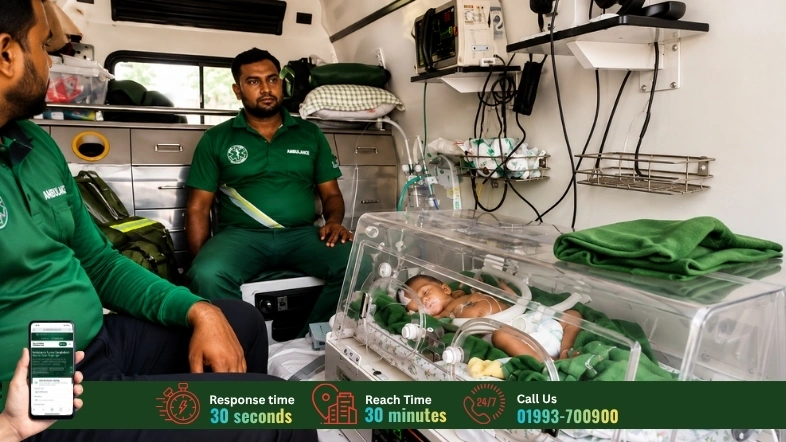
Neonatal Intensive Care Unit (NICU) Ambulance has been created to perform life saving transport for sick infants and neonates from point of care at the very earliest time possible. The ambulances have specialist medical equipment and are staffed by trained medical staff who provide advanced neonatal care during transport. NICU transport vehicles provide constant monitoring and care to critical neonates until they arrive at a hospital or specialty center for care.

Essential Elements of Our NICU Ambulance Service:

Specialized Medical Equipment: Modern equipment on NICU ambulances Neonatal transport equipment found on NICU ambulances is the most advanced and they include:

Incubator: offers a controlled environment for neonates/hatchlings, maintaining an ideal temperature and humidity to avoid hypothermia and instill calmness during transit.

Cardiac Monitor: Follows the heart rate, electrocardiogram (ECG) and oxygen levels of the baby in real-time and informs the medical team in case of any signs of discomfort or anomalies.

Oxygen delivery: Cylinders of oxygen and delivery systems for appropriate oxygen concentrations for newborns in respiratory distress or failure.

Ventilator: This is a machine that assists the baby to breathe if they are not doing that well by themselves and maintains proper breathing while the baby is being transported.

Suction: To remove secretions from the airway due to mucus accumulation, meconium aspiration, or any airway obstruction.

Infusion Pumps: Delivers iv fluids, medications, and nutrition, maintaining hydration, nutrition, and medication durante transport.

Temperature Management: State of the art systems to control and manage the baby’s body temperature, keeping them safe in all conditions.

Oxygen saturation monitor (Pulse-oximeter): A device that may clip on your baby’s skin or has a wrap around cuff or tape with light sensors that measure the amount of oxygen in the blood.

Neonatal Monitor: Monitors the baby’s condition by recording the heart rate, respiratory rate and oxygen concentration to keep them stable.

Respiratory Therapists: Trained in the resuscitation of newborns and in managing and monitoring an infant’s breathing while transporting the infant.
