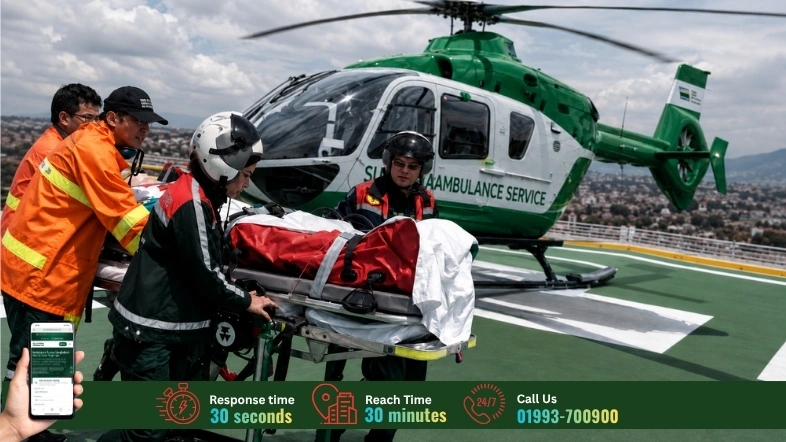
Air Ambulance Service is meant to offer a quick, lifesaving transport to patients suffering from burns, severe accidents, traumatic injuries, and so on that need urgent medical care and air travel for long distances. With state of the art medical equipment and qualified medical staff, air ambulances allow patients to be stabilized and receive ongoing care during transport - to a hospital or specialized medical facility. Air ambulances are critical when the ground transport will be too slow, such as off-shore or in time-critical medical interventions.

Features of Air Ambulance Service:

Specialized Medical Equipment:The air ambulances are fitted with state-of- the-art medical equipment that guarantee the utmost care for those who are being transported from one place to another. Some of the more specialized equipment is:

Cardiac Monitor Devices: Continuous monitoring of HR (Heart Rate), ECG, BP and oxygen saturation in order to identify any deviations or emergencies in flight.

Mechanical ventilation: Mechanical ventilators are used for patients who have respiratory failure or marked dyspnea, including during air transport. COVID-19 transfers usually require additional personnel (e.g., doctor, nurse/paramedic, and support staff), more than for non-COVID cases. Oxygen is provided using cylinders or portable concentrators and standard delivery devices such as nasal cannulae and masks. Despite these measures, oxygen supply and staffing may still be inadequate at times, particularly for patients who need continuous supplemental oxygen.

Infusion Pumps: Deliver IV fluids, medicines and nutrients to help keep your patient hydrated, stable, and life-sustaining during in transport.

AED: An emergency portable defibrillator that gives an electric shock in a cardiac arrest, or in the event of severe arrhythmia.

Advanced Airway Tools: Intubation kits and suction units to clear the patients’ airway and breathe more easily while during flight.

Temperature Regulation Systems: Used to keep the patient’s body temperature at the safe level during flight.

Patient Monitor Equipment: Continues tracking of vital signs to ensure the patient remains stable until arrival.

Skilled Medical Crew: An air ambulance AKA medical air transport or medevac, is staffed with specialized, highly skilled medical personnel who are able to provide critical care en route:

Flight Medics: Our trained team handles medical issues in the air and keeps the patient stable from start to finish.
